
At Homiere, many of our customers who are real estate agents ask us the same question: how exactly do AI platforms like ChatGPT decide who to name when someone asks for the best realtor in an area? The reasons for asking usually go without saying. Experienced agents want to know these platforms are not misrepresenting their track record. Newer agents want to understand the machine well enough to grow into it.
We have spent a significant amount of effort researching this, partly to build our own product and partly because the broader small business community deserves to know how these complex systems work. Here is what we found.
What we did
We defined just over 700 regions across California. They range from counties down to single neighborhoods, and they were chosen because each one sees enough real estate activity to be worth asking about.
Table 1. The regions we asked about, and how many agents work in each type.
| Type of region | Regions |
|---|---|
| City | 364 |
| Neighborhood | 189 |
| Multi-city region | 153 |
| County | 27 |
| Total | 733 |
We then asked three of the largest AI platforms - ChatGPT, Claude and Google Gemini - to recommend the best realtors in each region. Because these systems are non-deterministic, we asked every question multiple times: 6,273 separate answers in all. From each answer we extracted the names of every agent and real estate business mentioned, then matched those names against a database of licensed real estate professionals, and a second database of real estate transactions covering a majority of California home sales in the year preceeding August 2026.
That gave us, for the agents or businesses that were mentioned or not, two things we could line up side by side: how much real estate they actually sold, and whether an AI platform named them.
Selling more gets you named, but it does not get you ranked.
The first question is a simple one: Does closing more homes make AI more likely to name you?
Yes, and the effect is significant.
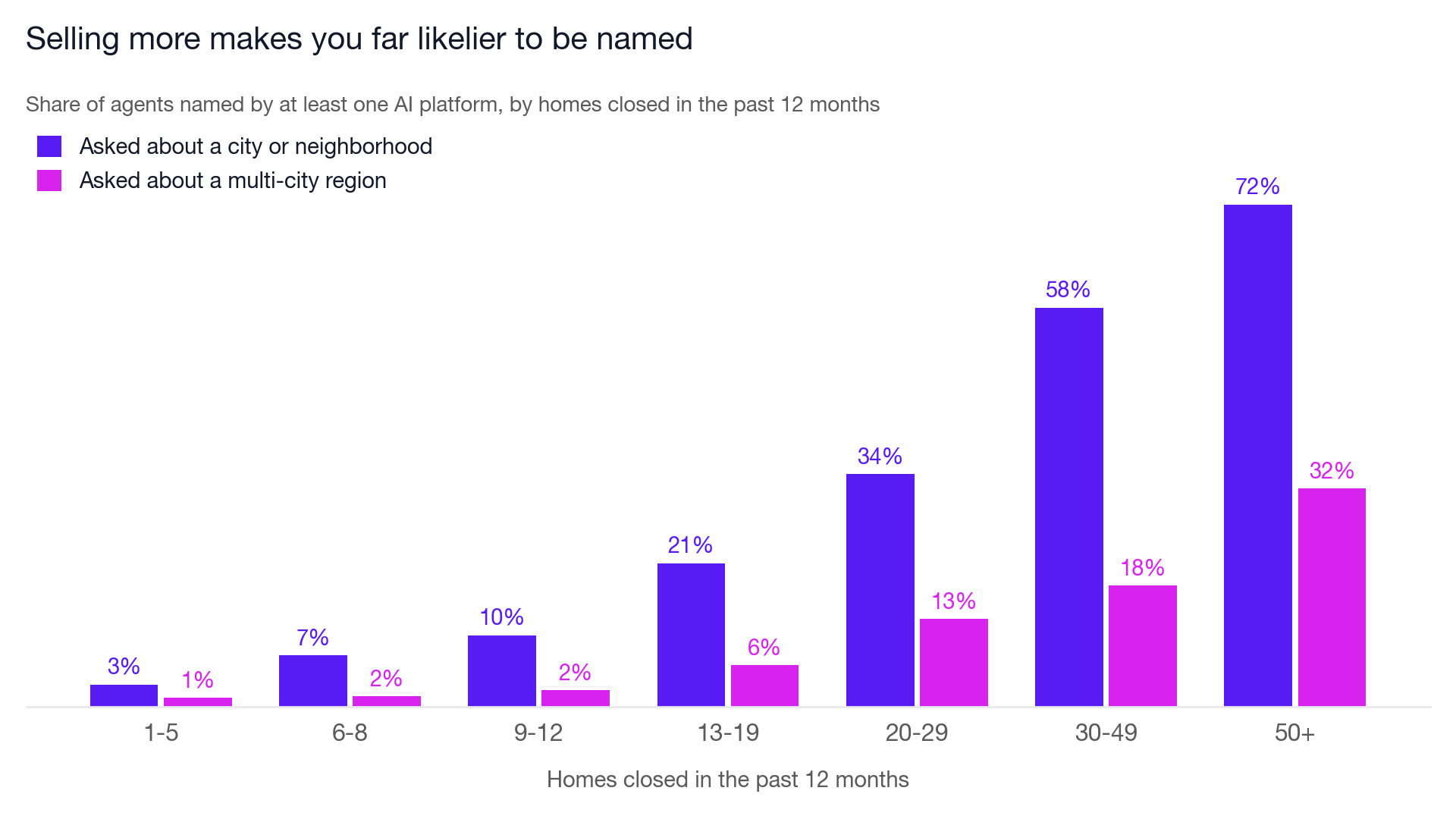
Figure 1. Share of agents named by at least one AI platform, by homes closed in the past 12 months, split by how broad the question was.
An agent who closed fewer than 6 homes in the past year has roughly a 1 in 40 chance of being named. An agent who closed 50 or more has close to a 1 in 2 chance when the question is about their city. The odds of being named roughly triple for every standard deviation of production, and the pattern holds in every kind of region we looked at.
The second thing the chart shows is just as important. The size of the region changes everything. Ask about a city or a neighborhood and a high-producing agent is named 72% of the time. If a user asks about a multi-city region, the same calibre of agent is named 32% of the time. That is not the AI being smarter about small places. It is arithmetic: an answer lists five to thirteen names, and hundreds of working agents share a region like the Inland Empire. Everyone else is squeezed out.
For an agent, the practical reading is that you are competing for a fixed number of slots against everyone the platform considers to be in your area. Perhaps obvious: the bigger the region is, the worse your odds are.
Where agents land in the list doesn't depend on production
Being named is one thing. Being named first is what people assume matters. So we investigated whether the order of names in an answer tracks anything real.
It barely does.
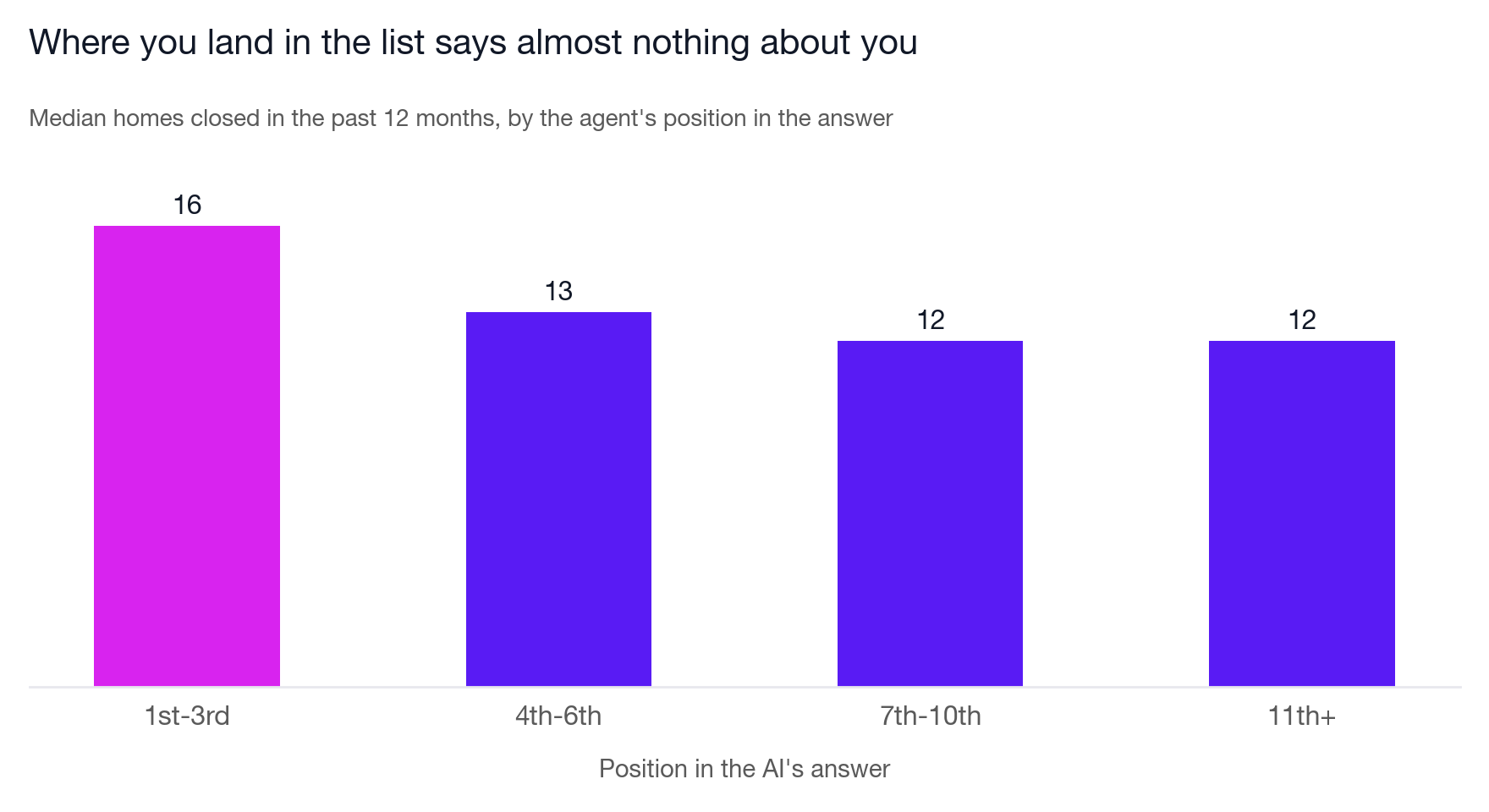
Figure 2. Median homes closed in the past 12 months by the agent's position in the answer.
Agents in the top three slots have closed a median of 16 homes; agents at eleventh place or below have closed 12. There is a slight edge at the very top, and then the signal flattens completely. Measured properly - comparing each named agent's position against how they rank among agents working the same area - the correlation is weak.
So production buys you a ticket into the answer. It does not significantly impact the position the AI ranks you at. Whatever decides the ordering, it is not how many transactions an agent has done.
The three platforms almost never agree
If these systems were measuring the same thing, they would converge on similar answers. They do not.
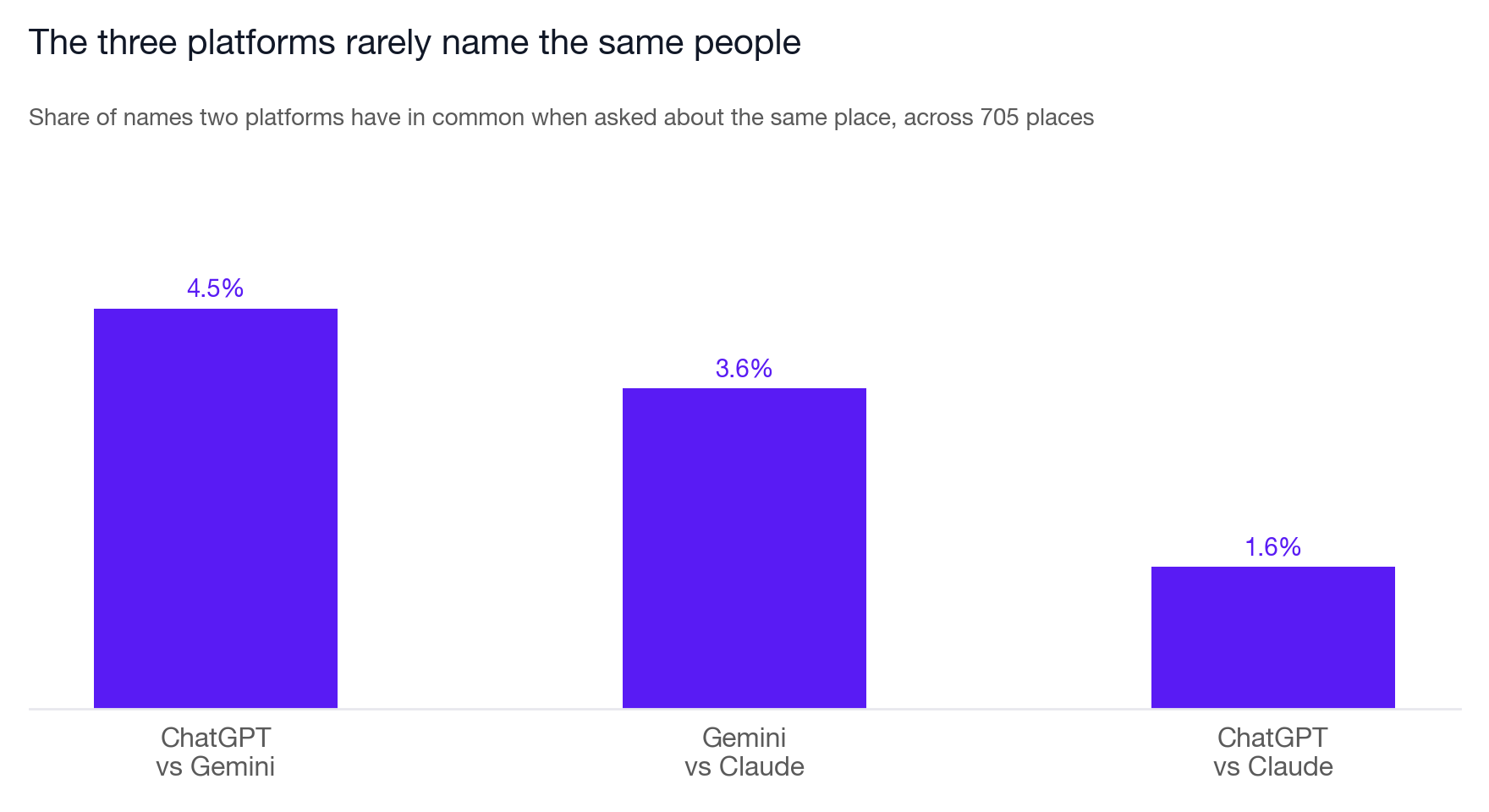
Figure 3. Share of names two platforms have in common when asked about the same place.
Asked about the same place, ChatGPT and Gemini share about 4.5% of the names they produce. ChatGPT and Claude share 1.6%. In practical terms, three buyers asking three different assistants about the same neighborhood will be handed three almost entirely different sets of agents.
That overlap is still higher than you would get by drawing names at random from the pool of local agents, so the platforms are not choosing arbitrarily. They are each applying a consistent view. The views simply have very little in common with each other.
There is an important qualification, though - agents with higher production tend to be recommended by multiple platforms. When we break out agents by production, this picture becomes obvious:
Table 2. Of agents named by at least one platform, how many platforms named them.
| Agent's production | Named by 2 or more platforms | Named by all three |
|---|---|---|
| Under 13 homes a year | 29% | 6% |
| 13 to 29 | 41% | 12% |
| 30 or more | 58% | 26% |
So the fuller statement is that the platforms broadly agree about who the biggest producers are, and disagree about nearly everyone else. An agent closing 30 or more homes who shows up on one platform is more likely than not to show up on a second. Below that, being named by one platform tells you very little about whether you appear on the others.
Ask twice and you get a different answer
The disagreement is not only between platforms. It is within them.
We asked every platform the identical question three times in a row. Of all the names a platform produced for a given place:
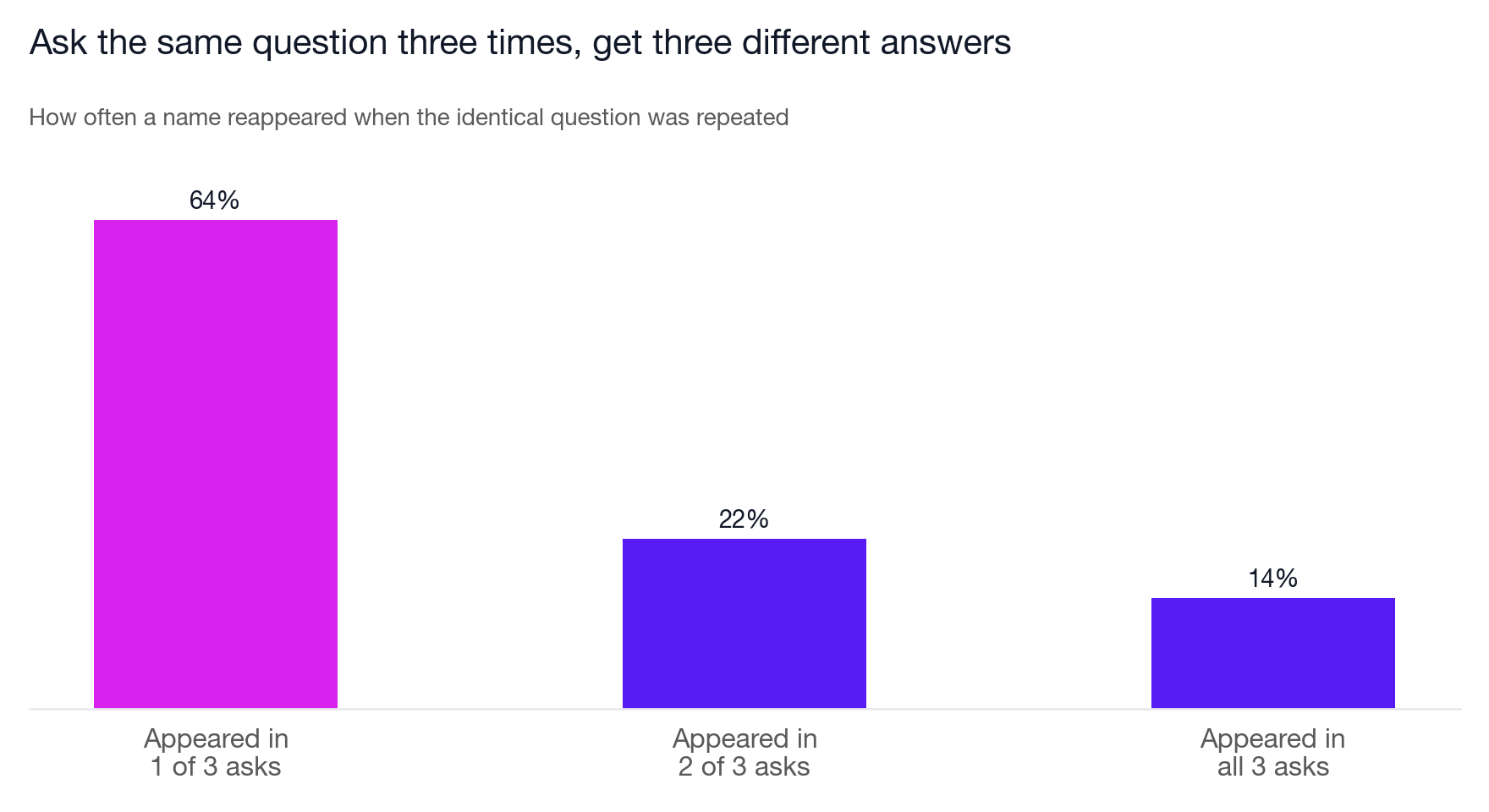
Figure 4. How often a name reappeared when the identical question was asked three times.
Only 14% showed up all three times. Nearly two thirds appeared once and then vanished on the next ask.
This has a direct consequence for anyone trying to monitor their own AI visibility. Checking once tells you very little. If you search your own name and do not appear, that single result is close to meaningless, and the same is true if you do appear. Three checks is roughly the minimum to know whether you are genuinely present, and even then you are measuring a tendency rather than a fact. It also means any vendor showing you a single before-and-after screenshot is showing you noise.
Are the recommended agents actually working in the area?
This is the claim we most expected to confirm. Roughly three quarters of recommended agents have genuinely closed a sale in the area they were recommended for, and the typical one sits around the 96th percentile of local production. The platforms are not, for the most part, naming people at random. However, there were still a quarter of the recommended agents that did not have a footprint in the area that was asked about. Thus, the AI is not a completely reliable indicator of who has the most experience in a particular area.
We also looked at things from the other perspective: we took the agents who are genuinely a top-three producer in their area and asked how often any platform named them:
Table 3. How often an area's top three producers are named at all.
| Top-three local producers | Named by at least one platform |
|---|---|
| When the question was about a city or neighborhood | 65% |
| When the question was about a multi-city region | 45% |
| Overall | 59% |
So even among the most productive agents in a given market, roughly two in five are missed entirely across three platforms and nine separate answers. In a large region it is closer to one in two. The platforms mostly name plausible people; they just fail to find a large share of the people doing a significant portion of the business.
What the AI reads before it answers
Because these platforms search the web before answering, we were able to recover the sources they cited for these answers.
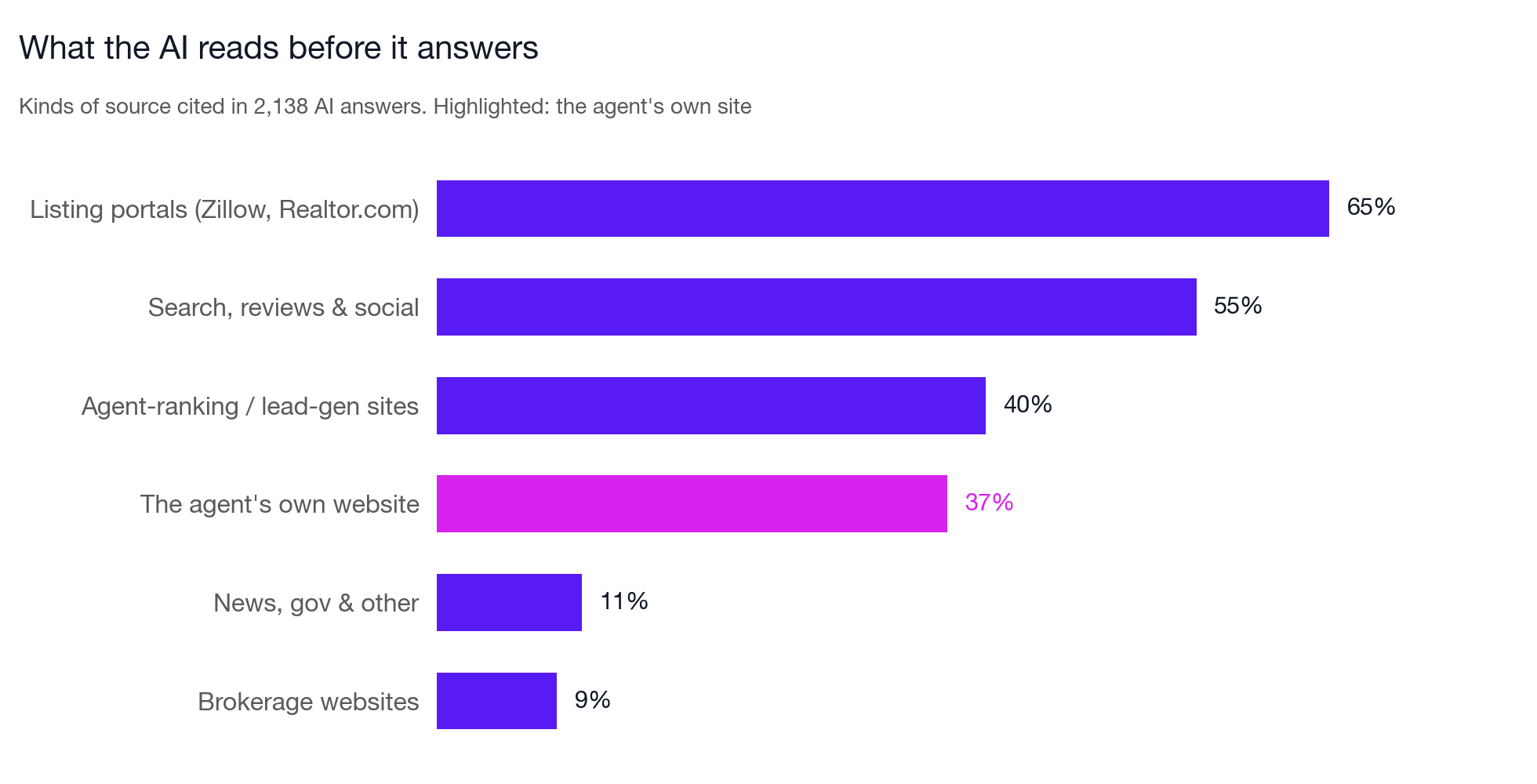
Figure 5. Kinds of source cited by the platforms before answering.
Listing portals dominate: Zillow alone is cited in 54% of answers, Realtor.com in 24%. Then a layer most agents underestimate - agent-ranking and lead-generation sites like FastExpert, HomeLight and EffectiveAgents, cited in 40% of answers. These are pages that rank agents for their own commercial reasons, and the AI treats them as evidence.
And then the number we found most encouraging: an agent's own website was cited in 37% of answers. That is more often than brokerage sites, which appear in under 9%. Your own site is not a vanity asset in this system. It is one of the primary documents the machine reads about you.
So what can an agent actually do?
A few things follow from all of this.
Your own website matters more than your brokerage profile. It is cited four times as often. A brokerage bio page is not doing this job for you.
Be present on the sources the machine actually reads. Your Zillow and Realtor.com presence are being consumed as evidence whether you maintain them or not. So are the ranking sites, which most agents have never thought about.
Specific beats broad. The odds of being named are three to five times better for a neighborhood or city than for a large region. An agent who is clearly, unambiguously the expert in one identifiable place has a far better structural position than one who describes themselves as covering an entire county.
Do not read anything into a single check. Search yourself three times, on more than one platform, before drawing a conclusion.
And the opportunity cuts both ways. High producers should know that their production is not automatically translating into visibility: even among an area's top three producers, two in five are not named by any platform. Lower-volume agents should know that while production strongly influences whether you appear at all, the ordering within an answer is close to random, which means the top of the list is not reserved for the biggest names. There is far more room in these systems than the rankings suggest.